We have long known that nutrients in functional foods are essential to good health. However, much remains unknown about how the components and structure of food itself influence metabolism and the mechanisms through which this occurs. To address this, Indonesian researchers led by Dr. Souvia Rahimah from Universitas Padjadjaran and Prof. Trina Ekawati Tallei from Sam Ratulangi University, together with Program-specific Assistant Professor Youdiil Ophinni (the Hakubi Center for Advanced Research), Associate Professor Chika Yamada, and a team of researchers from Kyung Hee University, carried out an integrative review examining how the physical composition of foods—collectively referred to as the food matrix—shapes the way nutrients are digested, absorbed, and put to work in the body.
The authors drew on a wide body of clinical and experimental research covering foods rich in bioactive compounds, including dietary fiber, polyphenols, omega-3 fatty acids, and fermented foods. These components have been shown to support the body’s metabolic balance by modulating sugar metabolism, lipid levels, inflammation, and the gut microbiome—all of which are key determinants in conditions such as obesity, metabolic syndrome, and type 2 diabetes.
Importantly, the review also underscores that individuals may respond differently to identical dietary interventions due to host genetic variations, epigenetic factors, and regulatory molecules such as microRNAs. Understanding these biological differences could inform the development of precision nutrition strategies tailored to individual metabolic profiles.
The study marks the first research output of a collaborative research agreement between Sam Ratulangi University and the Center for Southeast Asian Studies (CSEAS), Kyoto University, established in 2024. The study was published online in the Journal of Functional Foods on 6 March 2026.

Co-author Comments
Chronic metabolic diseases—obesity, diabetes, fatty liver—are rising at an alarming rate in rapidly growing economies such as Indonesia, as sedentary lifestyles and calorie-dense diets become the norm. Functional foods, which contain bioactive constituents capable of regulating metabolic functions, are therefore attracting growing interest as a practical and accessible means of mitigating these risks.
As someone trained in genomic research, I found it enlightening to engage with the field of nutrition science through this review. I am convinced by our conclusion that future research must integrate nutrition science more closely with multi-omics approaches—from genomics and metabolomics to microbiome analysis—to better elucidate how what we eat shapes our biology at a molecular level.
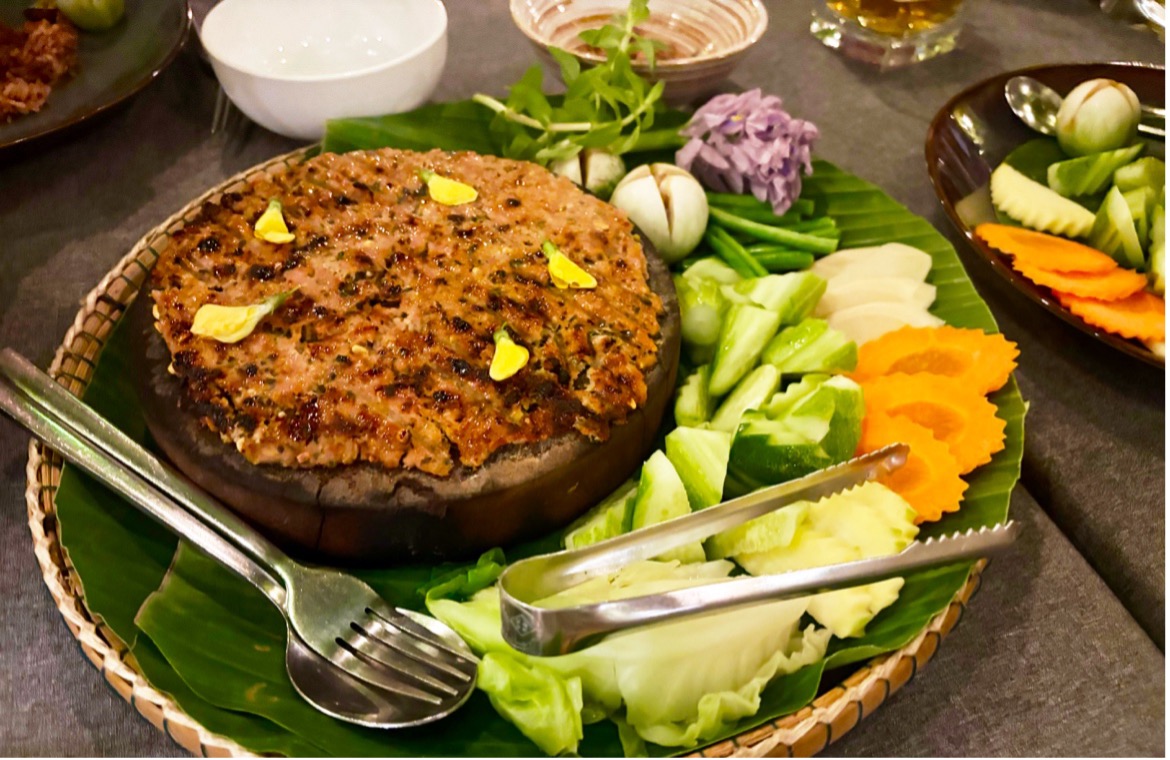
The need is particularly pertinent in regions such as Southeast Asia. The region has a rich diversity of food cultures, including a variety of fermented foods whose food matrices differ substantially from those typical of the Global North. Take natto and tempeh: both are fermented soybean products with shared nutritional profiles, but their food matrices are quite different. As a result, their digestion, absorption, and metabolic effects in the human body may not be identical.
And yet, the genomic knowledge base and variant databases for the highly heterogeneous populations of Southeast Asia, and the corresponding nutritional genomics research, remain considerably understudied. I hope that growing collaborations with native-based researchers and communities across the region will begin to change this—and in doing so, shed new light on the remarkable functional foods that have been part of Southeast Asian life for generations. (Youdiil Ophinni)
Publication Information
| Title | Functional foods and dietary matrices for metabolic improvement: an integrative review of mechanisms, evidence, and future directions |
| Author | Rahimah S, Tallei TE, Savitri M, Yamada C, Kim HJ, Choi M, Park MN, Ophinni Y, Kim B. |
| Journal | Journal of Functional Foods |
| DOI | 10.1016/j.jff.2026.107240 |
Researcher
Youdiil Ophinni Activity Database on Education and Research, Kyoto University
Chika Yamada Activity Database on Education and Research, Kyoto University
Contact
<About the Paper>
Youdiil Ophinni, Program-specific Assistant Professor,
Center for Southeast Asian Studies / Hakubi Center for Advanced Research, Kyoto University
E-mail: yophinni [at] cseas.kyoto-u.ac.jp (please replace [at] with @)
<About the Publicity>
Public Relations Committee, Center for Southeast Asian Studies, Kyoto University
Contact Form: https://bit.ly/4dAtaj9