A Philological Approach to the Hamza-nama: The Most Popular Muslim Romance in Pre-Modern Times
Speaker
Professor Nobuaki Kondo , The Director, Research Institute for Languages and Cultures of Asia and Africa, Tokyo University of Foreign Studies
Title
A Philological Approach to the Hamza-nama: The Most Popular Muslim Romance in Pre-Modern Times
Abstract
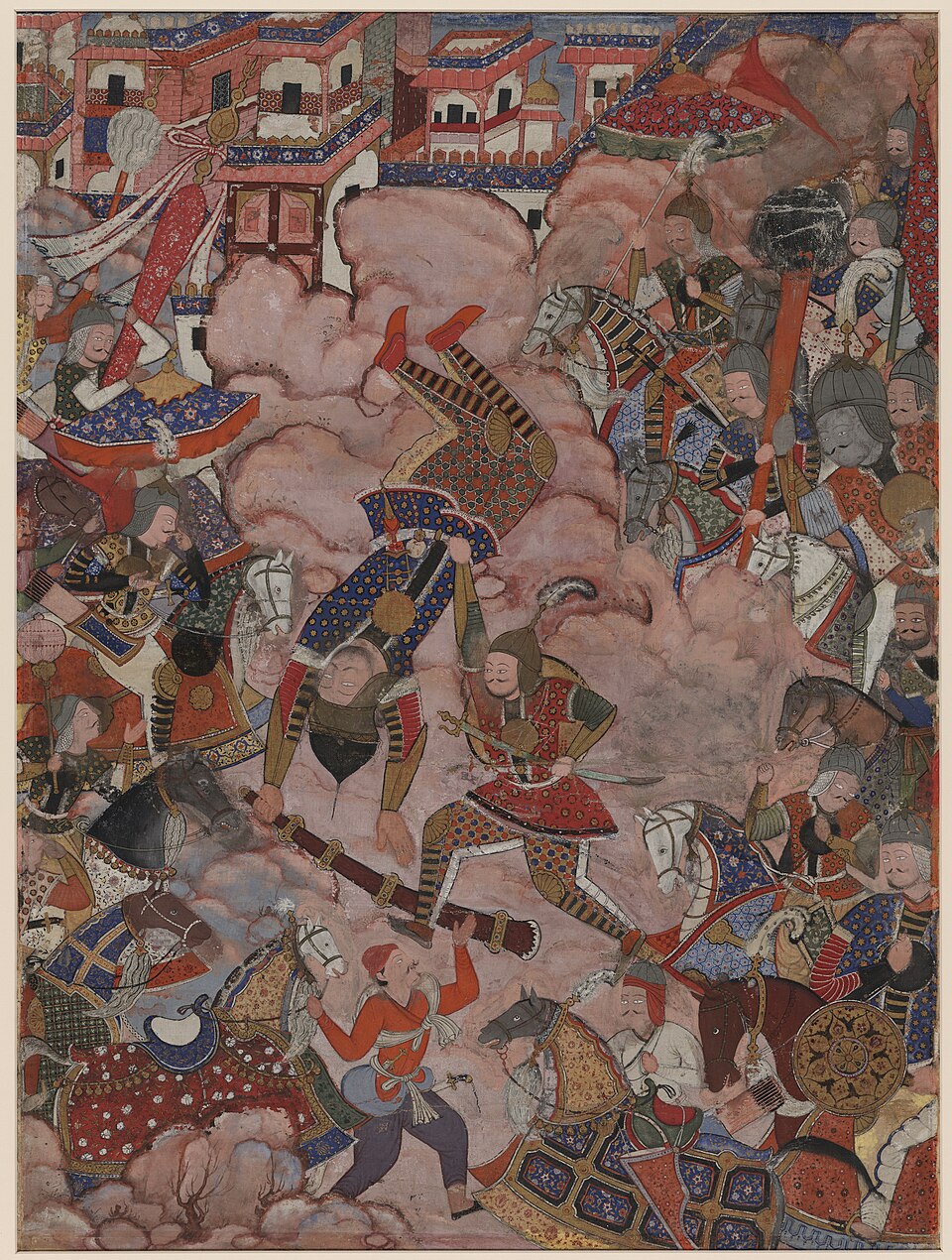
The Hamza-nama was the most widely read and recited romance in the Muslim world during pre-modern times. Originally composed in Persian, it was subsequently translated into Arabic, Turkish, Kurdish, Georgian, Urdu, Hindi, Tamil, Kashmiri, Bengali, Malay, and Javanese. The central figure, Hamza, is the uncle of the Prophet Muhammad. Historically, Hamza was born in Mecca, converted to Islam, and was renowned for his bravery. He served as a warrior in the early Islamic army and was killed in the Battle of Uhud in 625. In the romance, however, Hamza travels to Mada’in in Iraq and serves Anushirvan, identified as Sasanian Emperor Khosrow I. He falls in love with Anushirvan’s daughter, Mehrnegar, but the emperor opposes their union. Hamza is compelled to fight adversaries sent by Anushirvan. From the outset, Hamza adheres to the Abrahamic, monotheistic faith and seeks to convert his defeated enemies. His adventures include journeys to the Kaf mountains, inhabited by fairies and demons, and marriage to the fairy queen. In the final section of the romance, Hamza encounters the Prophet Muhammad and converts to Islam before his death in the Battle of Uhud. Although based on a historical figure, the narrative is entirely fantastical.
This study examines various versions of the Hamza-nama using a philological approach. Although the manuscript commissioned by Emperor Akbar (r. 1556–1605), renowned for its miniatures, is widely recognized, the evolution of the romance over time remains unclear. The Persian classical version, edited and published by Jaʿfar Sheʿar, presents textual issues when compared with other manuscripts. The Urdu translation of the first part of an abridged version by Hajji Qissa-khwan Hamadani, published in 1995, was claimed by the translator to be the oldest source. Although this claim is inaccurate, the work, compiled in 1613 in Deccan, provides insight into the transmission of the romance. This research traces the development of the Persian romance up to the nineteenth century by comparing multiple Hamza-nama texts.
Bio
Nobuaki Kondo is a professor at the Research Institute for Languages and Cultures of Asia and Africa, Tokyo University of Foreign Studies. He received the Ph.D. degree from the Department of Oriental History, the University of Tokyo in 1997. He is working on the early modern history of Iran and the Persianate Societies. His current projects are: 1) History of the Persian Ḥamza-nāma, 2) the early modern endowment of books by Iranians in India, and 3) the international system of the early modern Muslim world. His recent publications are “Ā’īn-i Akbarī as a Taẕkira of Poets,” Journal of Asian and African Studies, Supplement 3 (2024), “Shi‘ite Donations in the Early Modern Period,” in Comparative Study of Donation Strategies edited by Toru Miura (Tokyo, 2024), and “‘Ahd-nāmes in a Persianate Context before 1500,” Acta Asiatica 130 (2026). His next publication, “Comparing Manuscripts of a Popular Romance: The Persian Classic Version of the Ḥamza-nāma,” will appear in Textual Transmission in the Islamic Manuscript Age, which will be edited by Philip Bockholt and Yui Kanda and published by Brill in late 2026.
Organizer
Enzio Wetzel (Goethe-Institut Villa Kamogawa), Ryosuke Ohashi (Japanisch-Deutsches Kulturinstitut), and Majid Daneshgar (CSEAS, Kyoto University)