Associate Professor Satoko S. Kimura and Mayu I. Ogawa (then a doctoral student at the Graduate School of Agriculture, Kyoto University; currently a Researcher at the Japan Agency for Marine-Earth Science and Technology), together with their colleagues, have developed a novel method to accurately extract echolocating click trains of the narrow-ridged finless porpoise (Neophocaena asiaeorientalis) and vessel noise from ultrasonic data recorded underwater.
This method combines a rule-based filter, which selects only acoustic events that meet specific conditions, with Random Forest, a machine learning algorithm. By applying this hybrid framework to data obtained from the A-tag—a pulse event recorder that captures underwater ultrasonic signals—it became possible to detect finless porpoise click trains and ultrasonic components of vessel noise with high accuracy.
The results of this study significantly reduce the burden of manual data inspection in long-term underwater acoustic monitoring, thereby facilitating the ecological monitoring and environmental impact assessment of small cetaceans living in diverse and noise-rich marine environments.
This research was published in the open-access journal Scientific Reports on August 25, 2025.
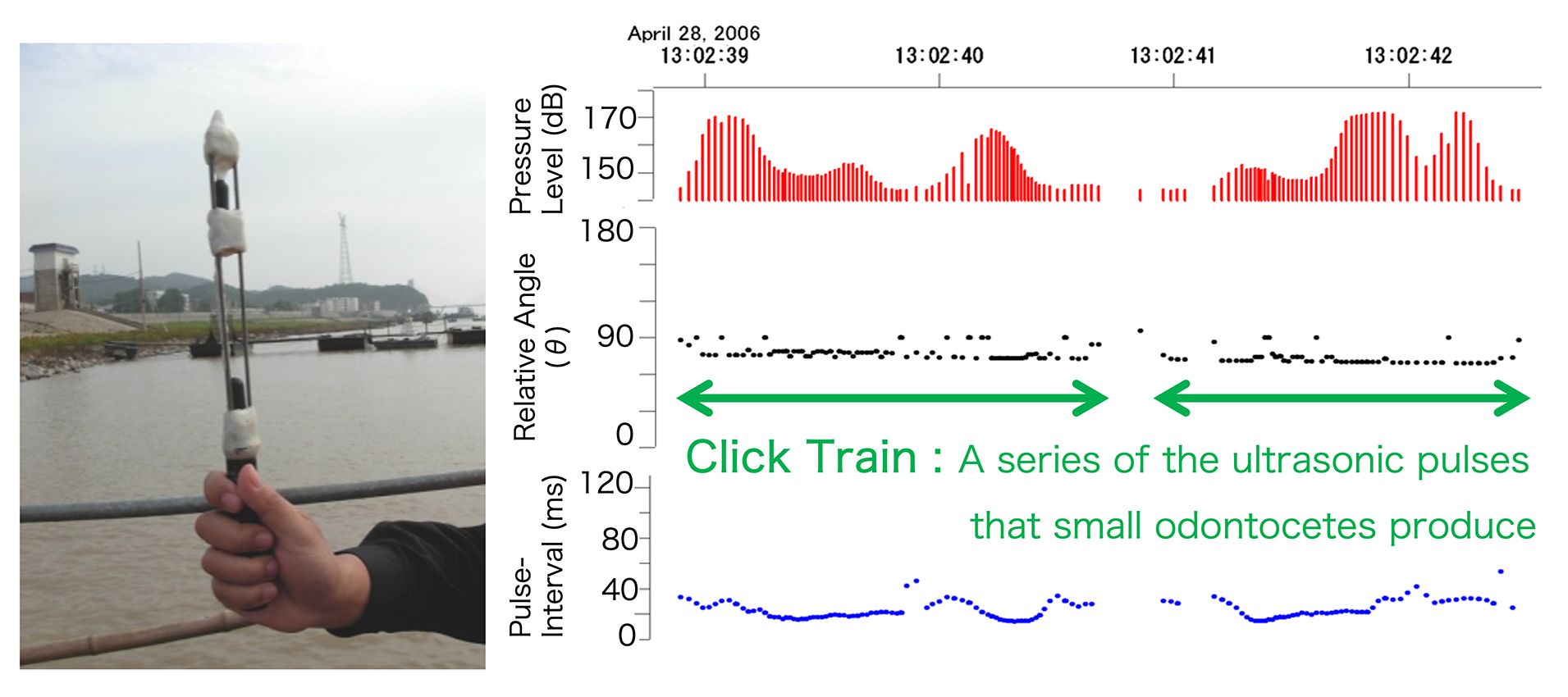
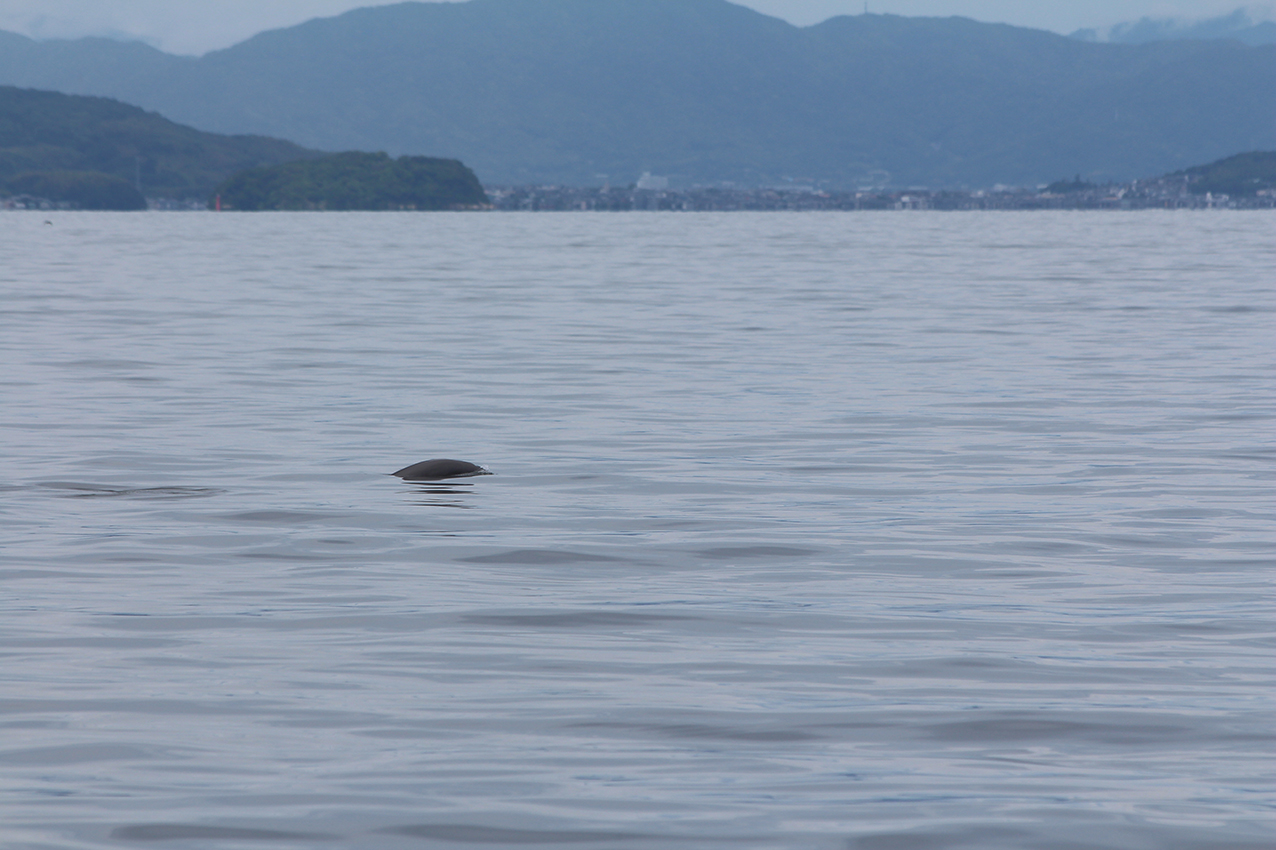
They produce click trains at a very high rate—about once every five seconds—using the echoes of these sounds to perceive their surroundings (i.e. echolocation).
Comments from the Authors
Understanding what is happening in the ocean through sound is directly connected to marine conservation and the sustainable use of marine environments. I hope this study contributes to that effort. This work was supported by JST FOREST Program “Ecological understanding and environmental impact assessment of Asian coastal ecosystems driven by underwater acoustic remote sensing (JPMJFR2171),” as well as JSPS KAKENHI (JP18H06495, JP19K20460, JP22H05652). (Satoko S. Kimura)
In past acoustic monitoring, researchers had to visually inspect enormous amounts of data. While this was painstaking work, that experience directly informed the development of the present method. Our new approach dramatically improves analytical efficiency and makes long-term monitoring of finless porpoises far more accessible. I look forward to continuing the challenge of uncovering new insights from the hidden sounds of the ocean. (Mayu I. Ogawa)
Researchers
Satoko S. Kimura Activity Database on Education and Research, Kyoto University
Mayu I. Ogawa Researchmap
Publication Information
| Title | A hybrid method combining rule-based filter and machine learning to detect porpoise and vessel sounds from a pulse event recorder |
| Author | Ogawa I. Mayu, Kimura S. Satoko, Ishiai Nozomu, Akamatsu Tomonari |
| Journal | Scientific Reports |
| DOI | 10.1038/s41598-025-16370-1 |
Contact
<About the paper>
Satoko S. Kimura, Associate Professor, Center for Southeast Asian Studies, Kyoto University
E-mail: kimura [at] cseas.kyoto-u.ac.jp (Please replace [at] with @.)
<About the publicity>
Public Relations Committee, Center for Southeast Asian Studies, Kyoto University
Contact form: https://bit.ly/4dAtaj9