49th Southeast Asia Seminar
Global Disruptions and Southeast Asia:
Exploring histories, narratives, and transdisciplinary challenges
Phnom Penh/Sihanoukville, Cambodia
November 19-24, 2025
REPORT
The Center for Southeast Asian Studies (CSEAS), Kyoto University, organized the 49th Southeast Asia Seminar. This year’s theme is “Global Disruptions and Southeast Asia: Exploring histories, narratives, and transdisciplinary challenges.” The seminar was held in Phnom Penh and Sihanoukville, Cambodia, from November 19 to 24, 2025.
The world today faces numerous global challenges, including climate change, disasters, global investment and local well-beings. Conventional academic approaches, constrained by existing disciplines, have shown limitations and ineffectiveness in addressing these challenges. We believe that integrating Area Studies (AS) and Transdisciplinary Studies (TD) to develop a new form of knowledge production and social contribution could help build a better future. AS aims not only to understand local uniqueness but also to fully address multi-scale connections to global dynamics. It is the key to achieving global coexistence that CSEAS has been pursuing. TD, meanwhile, is a relatively recently developed concept compared to AS, mobilizes diverse academic disciplines, and transcends siloed fields by engaging central and local governments, civil society, and the private sector in collaborative problem-solving. The 49th Southeast Asia Seminar aimed to provide an opportunity for early-career researchers across disciplines to discuss the reconceptualization of knowledge production and social engagement in Southeast Asian Studies by introducing AS and TD.
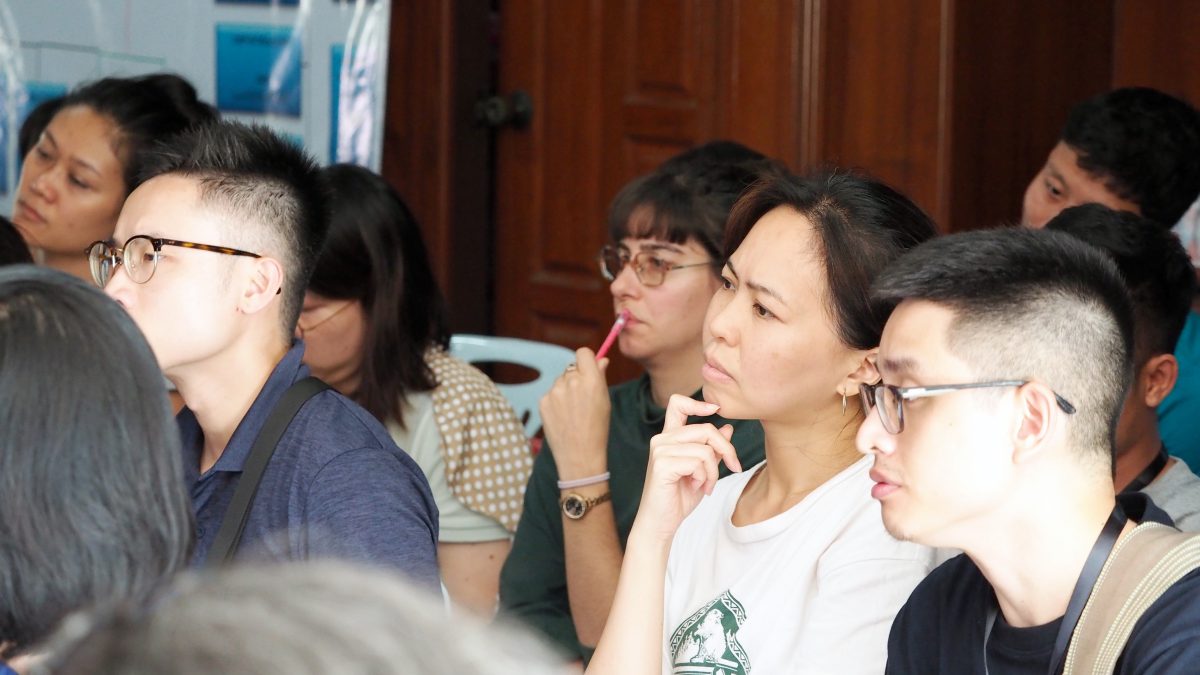
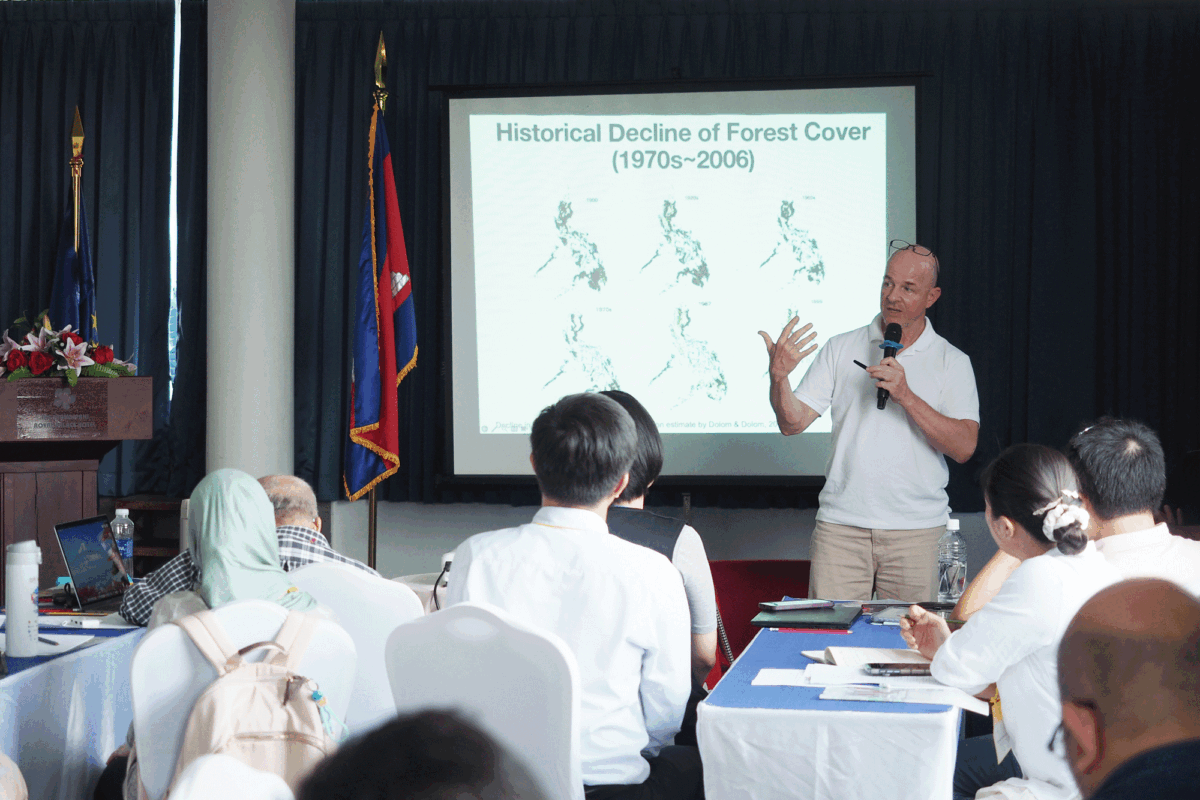
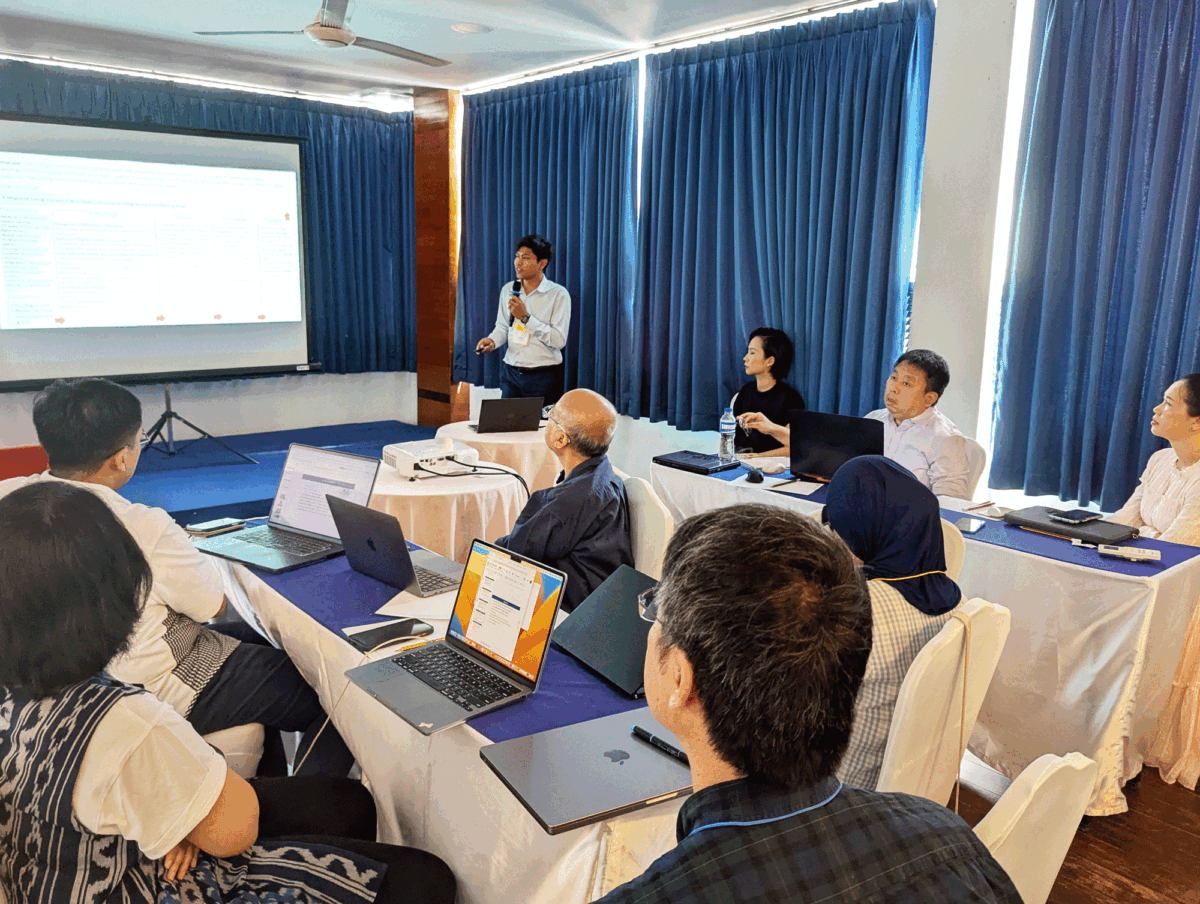
We have 26 participants from eleven countries, including seven from CSEAS. Over five days, participants engaged in an intensive discussion for exchanging ideas and opinions for AS and TD by attending lectures on cases of Global Disruptions in Southeast Asia, such as the challenge of a transdisciplinary environment preservation project in Riau, Indonesia, the experience on interdisciplinary collaborations for disaster management in Leyte island, Philippine, and the reconsideration of local responses toward globally standardized rules/criteria produced by developed countries. The participants also attended a special documentary film screening on the Cambodian experience of rapid economic development, following a lecture on the role and power of foreign investment in economic and social development in Southeast Asia. Finally, the participants made a short trip to Sihanoukville, a well-known coastal town, to observe various aspects of Global Disruptions today.
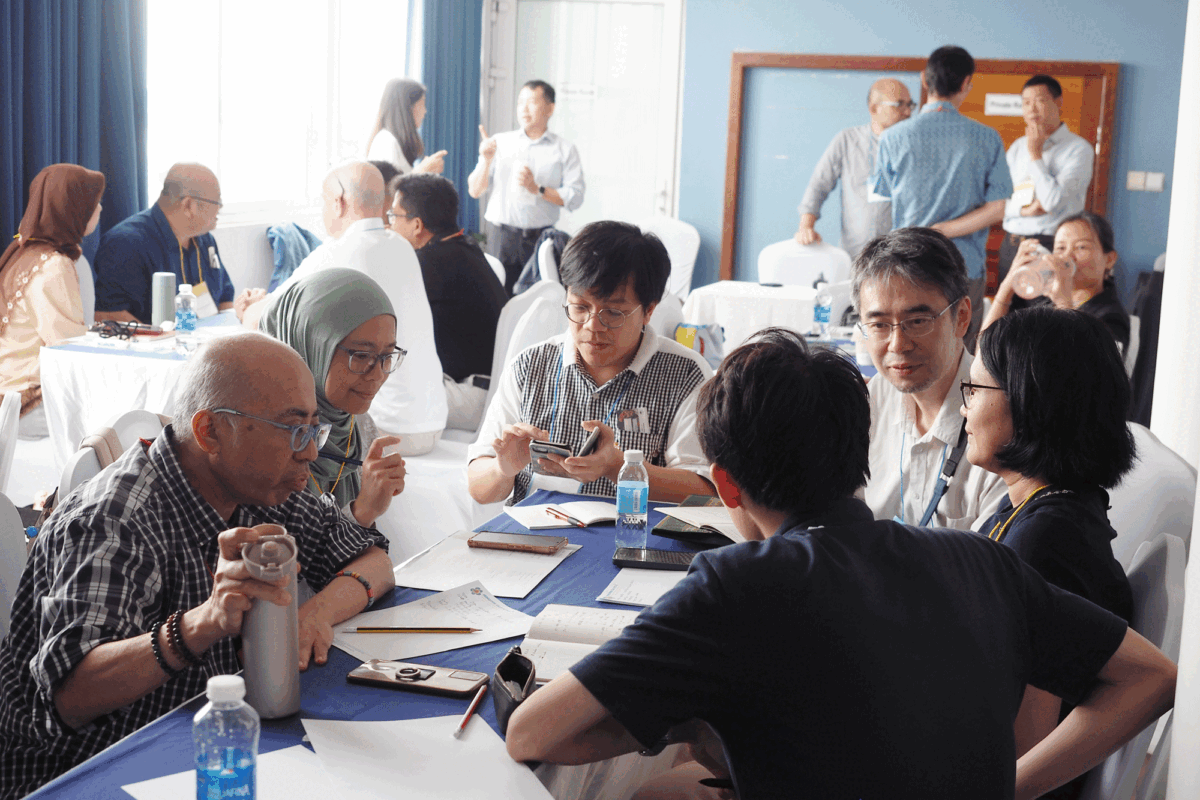
On the first day, we divided the participants, twelve early-career researchers who were educated and trained in a single discipline and nine relatively senior researchers with rich experience in multi/trans-disciplinary research, into four groups and asked each group to co-create one research proposal of a multi/trans-disciplinary collaborative project through discussions. Most of the young participants had not yet engaged in intensive communication with specialists from diverse academic backgrounds and countries. It was a crucial time for them to learn how to communicate with ‘others’ to tackle common problems. By doing this, the seminar encouraged them not only to understand the value of challenge but also to sense the difficulties and enjoyment in collaborating with ‘others’ from different disciplines and backgrounds. On the final day, all the groups presented their multi/trans-disciplinary research proposals addressing a specific issue related to Global Disruptions in Southeast Asia.
The seminar’s five-day duration is not enough to fully understand AS and TD. However, we believe the seminar successfully planted valuable seeds for the future.
Satoru Kobayashi
Chair/Professor
CSEAS, Kyoto University




OVERVIEW
The Center for Southeast Asian Studies (CSEAS), Kyoto University, is organizing the 49th Southeast Asia Seminar. This year’s theme is “Global Disruptions and Southeast Asia: Exploring histories, narratives, and transdisciplinary challenges”. The seminar will be held in Phnom Penh and Sihanoukville, Cambodia, from November 19 to 24, 2025.
This seminar aims to reconceptualize both knowledge production and social engagement, to ensure concrete contributions in the era defined by polycrises by integrating two academic approaches: Area Studies (AS) and Transdisciplinary Studies (TD). Area Studies grounds our understanding in specific regions, nations or communities -shaped by their environments, histories, culture and society. Not only does it aim to understand local uniqueness, but also fully address multi-scale connections to global dynamics. Transdisciplinary Studies, meanwhile, mobilizes diverse academic disciplines and transcends siloed fields by engaging international organizations, central and local governments, civil society, and the private sector in collaborative problem-solving.
The seminar will convene outstanding early-career researchers from across the humanities, social sciences, and natural sciences who received their doctorates within the past decade and have a strong motivation to collaborate with specialists from diverse disciplines and backgrounds toward creating a better future.
Over five days, participants will engage in an intensive exchange of ideas and opinions for Area Studies and Transdisciplinary Studies by attending several lectures on cases of Global Disruptions in Southeast Asia. At the end of the seminar, each participant, guided by senior scholars and based on their own research interests, will develop a proposal for a research project that addresses a specific issue of Global Disruptions in Southeast Asia.
NOTE: Participants will be recruited through a limited open call supported by recommendations from senior researchers affiliated with CSEAS activities to date. Though there will be no open call directly for applications this year, we will share updates and outcomes from the seminar on this website. We look forward to welcoming broader participation in the coming Southeast Asia Seminars.
CONCEPT
Humanity faces a web of interlocking crises—climate change and disaster risk, surging energy use and environmental collapse, global migration and demographic shifts, and mounting tensions between the drive for capitalist growth and the need for social welfare. These challenges demand urgent, systemic action. Parallel to this, we face the destruction of our ecosystems, the marketization of food production, unprecedented urbanization, extreme weather events, pandemics, community breakdown and widening inequality, forces that now profoundly shape our contemporary lives. In response, actors across international bodies, national governments, academia and civil society are collaborating to develop new frameworks and policies that respond to these polycrises. Yet, such efforts are too often centered upon Western academia, the international community and nation-state interests creating a stark division between those whose actions drive crises and those who bear their consequences. It is precisely this gap -a collision of causes and effects- that we characterize as “Global Disruptions.”
Southeast Asia has long been shaped through dynamic negotiations with external forces. Owing to its geographical position between India and China, the region has interacted and absorbed advanced civilizations and through the fusion of animist traditions and nature worship, forged a distinct cultural sphere. Cultural contact during the colonial period was another critical external influence that shaped Southeast Asian’s self-understandings of their societies. The postcolonial era witnessed the region navigate the ideological divides of the Cold War and projected its own values -centered on multicultural coexistence and harmony with nature- as forms of resilience unique to Southeast Asia. However, in today’s age of Global Disruptions, we cannot uncritically treat this cultural and social distinctiveness as a given or rely on it as a framework to anticipate the future. New challenges demand new imaginaries and approaches.
This seminar aims to reconceptualize both knowledge production and social engagement, to ensure concrete contributions in the era defined by polycrises by integrating two academic approaches: Area Studies (AS) and Transdisciplinary Studies (TD). Area Studies grounds our understanding in specific regions, nations or communities -shaped by their environments, histories, culture and society. Not only does it aim to understand local uniqueness, but also fully address multi-scale connections to global dynamics. Since 1965, the Center for Southeast Asian Studies (CSEAS) of Kyoto University pioneered Area Studies with the special emphasis on interdisciplinarity in its research activities forging bridges between the humanities, social sciences, and natural sciences (e.g., agricultural and medical research, informatics). Moreover, its former flagship G-COE project “In Search of Sustainable Humanosphere in Asia and Africa (FY2007-2011)” was one of the first programs at CSEAS to extended multi-disciplinary collaborations into energy and disaster-related fields. Transdisciplinary Studies, meanwhile, mobilizes diverse academic disciplines and transcends siloed fields by engaging international organizations, central and local governments, civil society, and the private sector in collaborative problem-solving. Building on this, the Japan-ASEAN Platform for Transdisciplinary Studies (FY2016-2021), one of recent flagship projects of CSEAS, presented us with core problem-driven research alongside international organizations, local governments, and civic groups, demonstrating the real-world impact of this integrated approach.
Cambodia, the site of this seminar, offers a particularly compelling lens through which to examine the relationship between the Global Disruptions and Southeast Asia -both historically and present. Understanding Cambodian society and culture requires grappling within the enduring influence of external powers. Following independence from French colonial rule in 1953, Cambodia was drawn into civil conflict under the shadow of the Vietnam War and suffered prolonged international isolation due to the Cold War geopolitics. Its current political framework was established through elections orchestrated by external powers such as the United Nations. While all Southeast Asian countries have developed through a combination of indigenous cultural traditions and external interventions, Cambodia exemplifies a case where foreign involvement has been especially decisive.
Today, three major forces -each emblematic of broader Global Disruptions- are shaping Cambodia’s trajectory: the institutional power of international development agencies, a precarious export-oriented capitalist economy central to national development policy; and China’s growing hegemonic influence. The political and economic reach of the Chinese state and capital is a critical factor across contemporary Southeast Asia. And nowhere is this more visible than in Sihanoukville. In this coastal city, massive Chinese investment in casinos, hotels, and condominiums has dramatically transformed the urban landscape. To visit the city provokes reflection on the tangible, uneven and accelerating effects of Global Disruptions taking place across the region today.

Massive Chinese investment in Sihanoukville dramatically transforming the urban landscape

Massive Chinese investment in Sihanoukville dramatically transforming the urban landscape

Swidden agriculture practiced in the highland areas of Leyte

Overhead drone shot of Escaninas Farm: expanding farms on steep uplands contribute to forest loss in Southern Leyte
(Photo: Ian Navarette)

A macaque and its offspring by the roadside near Balikpapan, East Kalimantan, waiting for food from passing drivers
(Photo: Youdiil Ophinni)

Accumulated coastal waste along Bunaken National Park, North Sulawesi, sourced from Manado’s urban runoff
(Photo: Youdiil Ophinni)

Prisoners in Jakarta receiving education from NGO staff about infectious diseases prior to medical examinations

PROGRAM
| Day 1 November 19 |
Arrival of participants | ||
| Day 2 November 20 |
8:00-8:30 | Registration | |
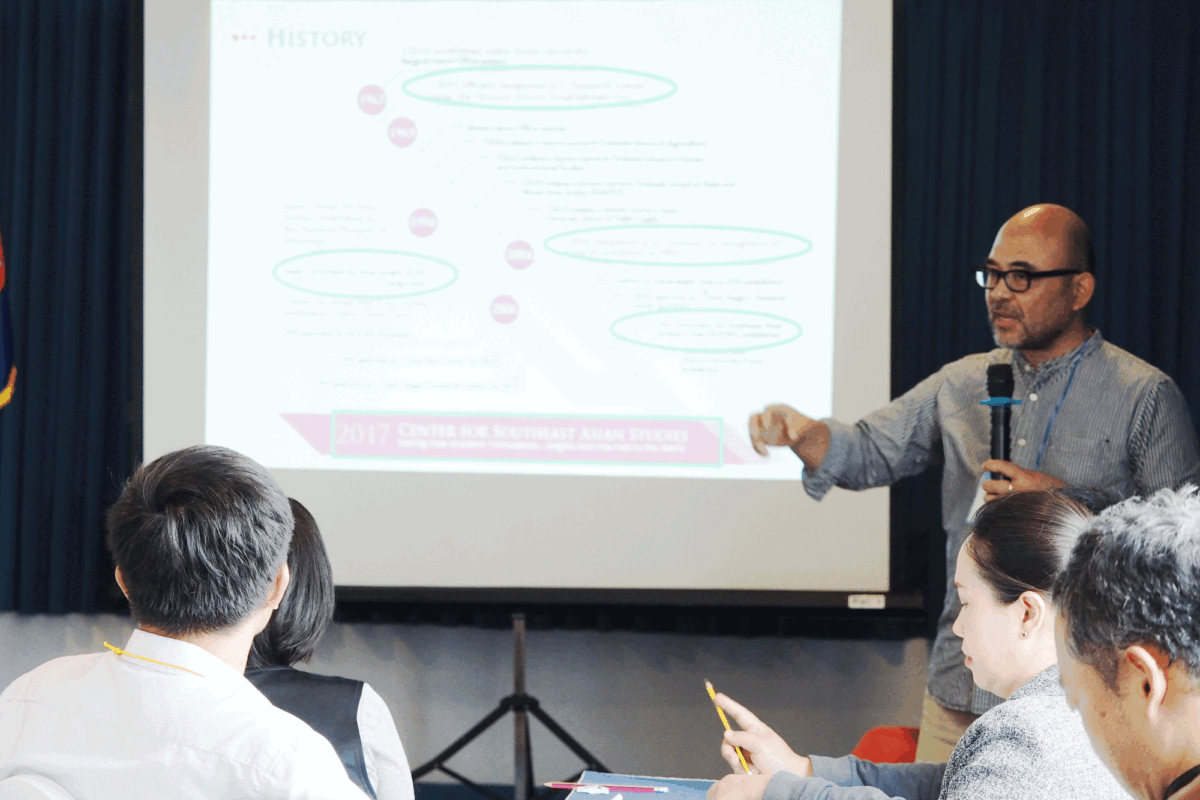
| 8:30-9:00 | Opening Session Welcome Remarks/ Introduction to the Seminar Kobayashi Satoru (Chair, CSEAS, Kyoto University) |
||
| 9:00-9:45 | Self-introduction of Seminar Participants | ||
| 9:45-10:00 | Explanation of the assignment to participants and groups Kobayashi Satoru (Chair, CSEAS, Kyoto University) |
||
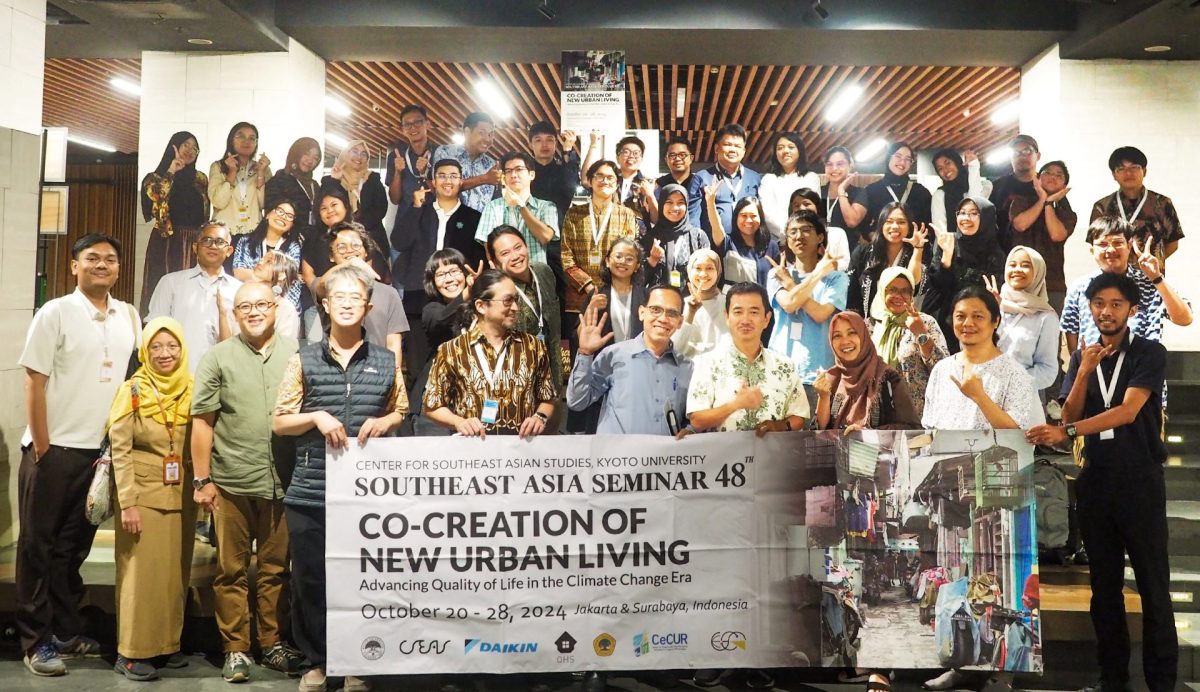
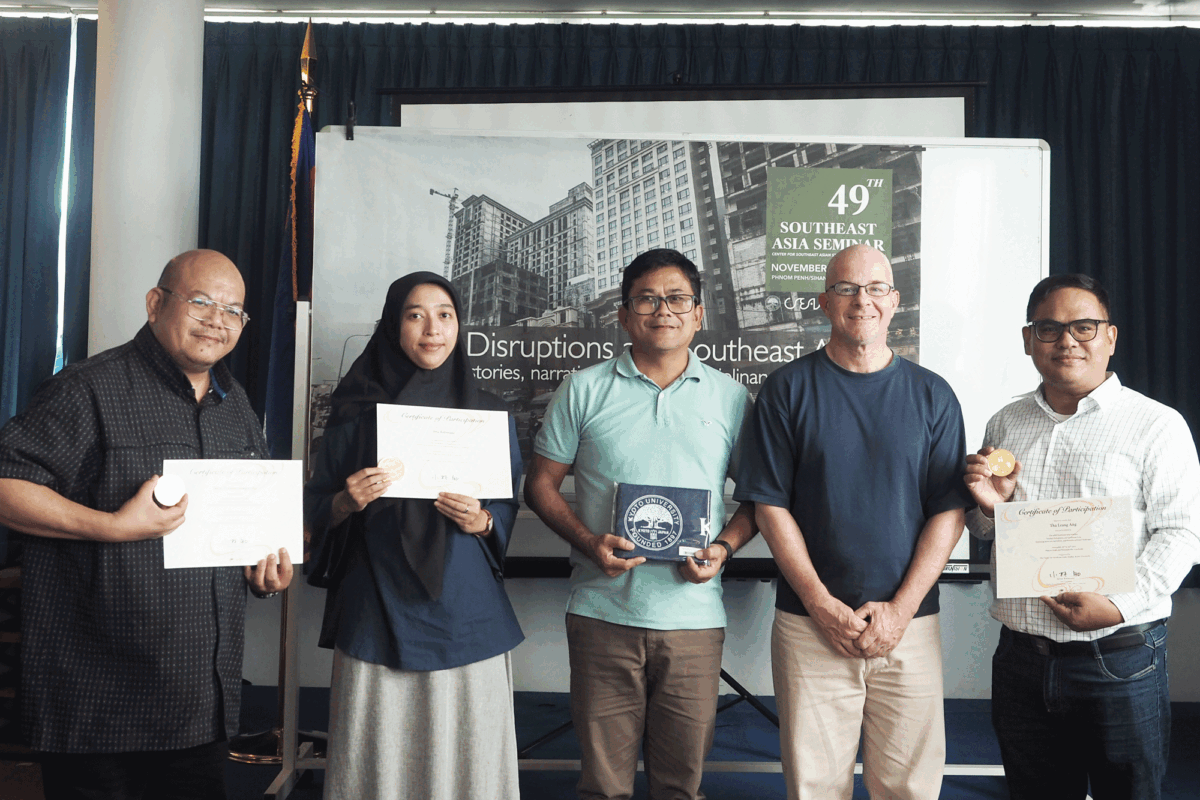
| 10:00-10:15 | Group Photo | ||
| 10:15-10:30 | Break | ||
| 10:30-12:00 | Session 1 “Transdisciplinary Research on Environmental Vulnerability: Toward the Regeneration of Tropical Peatland Societies.“ Kozan Osamu (CSEAS, Kyoto University) |
||
| 12:00-14:00 | Lunch Break | ||
| 14:00-15:30 | Session 2 “Soil(s) as a Boundary Object: Linking Science, Society, and Sustainability in the Philippines” Mario Lopez (CSEAS, Kyoto University) Ian Navarette (Southern Leyte State University, Philippines) |
||
| 15:30-15:45 | Break | ||
| 15:45-17:15 | Session 3 “Transdisciplinary Dialogue on the More-than-Human Relations in the Anthropocene” Fadjar Ibnu Thufail (National Research and Innovation Agency, Indonesia) Youdiil Ophinni (CSEAS and the Hakubi Center for Advanced Research, Kyoto University) |
||
Day 3 November 21 |
8:30-10:00 | Session 4 “Data-driven Global “Rightness”: State, Market, and Peripheral Societies: Examining Commodity Production, Conservation, and Health Rights in Southeast Asia” Yamada Chika (CSEAS, Kyoto University) Ubukata Fumikazu (Academic Research Assembly, Okayama University) |
|
| 10:00-10:15 | Break | ||
| 10:15-11:45 | Session 5 “Learning from Local Responses to Large Changes in Investment: Experience from Southeast Asia” Machikita Tomohiro (CSEAS, Kyoto University) Zhai Yalei (CSEAS, Kyoto University |
||
| 11:45-14:00 | Lunch Break | ||
| 14:00-14:30 | Transportation to Bophana Audiovisual Resource Center | ||
| 14:30-16:30 | Special Session at Bophana Audiovisual Resource Center “Rethinking “Global Disruptions” in Cambodia through audiovisual resources.“ Keo Duong (Royal University of Phnom Penh, Cambodia) Chea Sopheap (Bophana Audiovisual Resource Center, Cambodia) Discussion of short and contemporary documentaries that feature land and poverty issues related to microfinance debt in Cambodia 1. Home Cemetery (7 minutes) 2. Street Mechanic (19 minutes) |
||
| Day 4 November 22 |
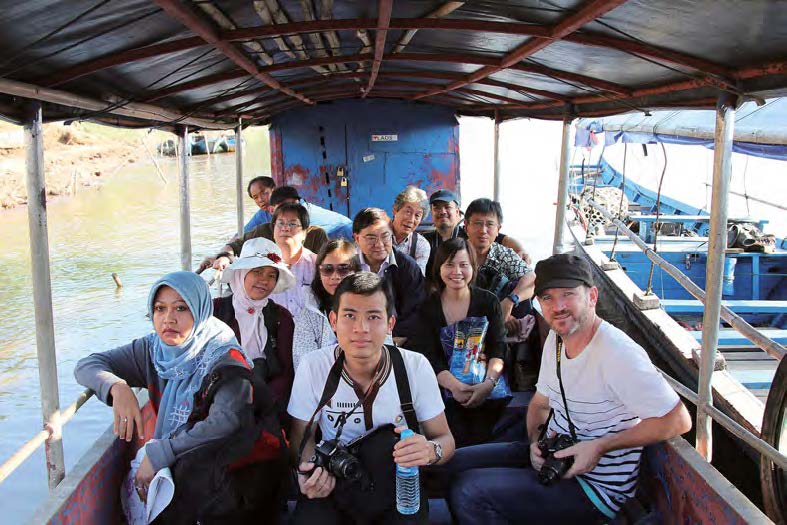
7:30-16:00 | Field Tour to Sihanoukville City – Observation of the suburb of Phnom Penh City – Observation of rural landscape: geography, forest, river, farmland, infrastructure, factories, agricultural activities, and other socio-cultural properties – Observation of plantations (oil palm, suger cane, fruit trees. etc.) |
|
| 16:30-20:00 | Field Research by group in Sihanoukville City | ||
| Day 5 November 23 |
8:00-13:00 | Field Research by group in Sihanoukville City | |
| 13:00-15:00 | Lunch and Discussion by groups “Global Disruptions in Sihanoukville, Cambodia.“ |
||
| 15:00-19:00 | Return to Phnom Penh | ||
| Day 6 November 24 |
7:30-10:00 | Preparation of Presentations | |
| 10:00-13:00 | Final Session Presentation of Participants: 4 groups, 40 minutes each |
||
| 13:00-13:40 | Wrap Up Session Wrap Up and Closing Remarks |
||
ABOUT SEA SEMINAR
The Southeast Asia seminar has been held annually by the Center for Southeast Asian Studies, Kyoto University since 1977. For more information on the long history of the Southeast Asia Seminars, please visit our website.