Translation as a Cultural Technique: Multilingual Intra‑Islamic Knowledge Transfer in the Eastern Mediterranean and Middle East (1350–1800)
Speaker
Prof. Dr. Philip Bockholt , Junior Professor for the History of the Turco-Persian World, Institute of Arabic and Islamic Studies, University of Münster
Title
Translation as a Cultural Technique: Multilingual Intra‑Islamic Knowledge Transfer in the Eastern Mediterranean and Middle East (1350–1800)
Abstract
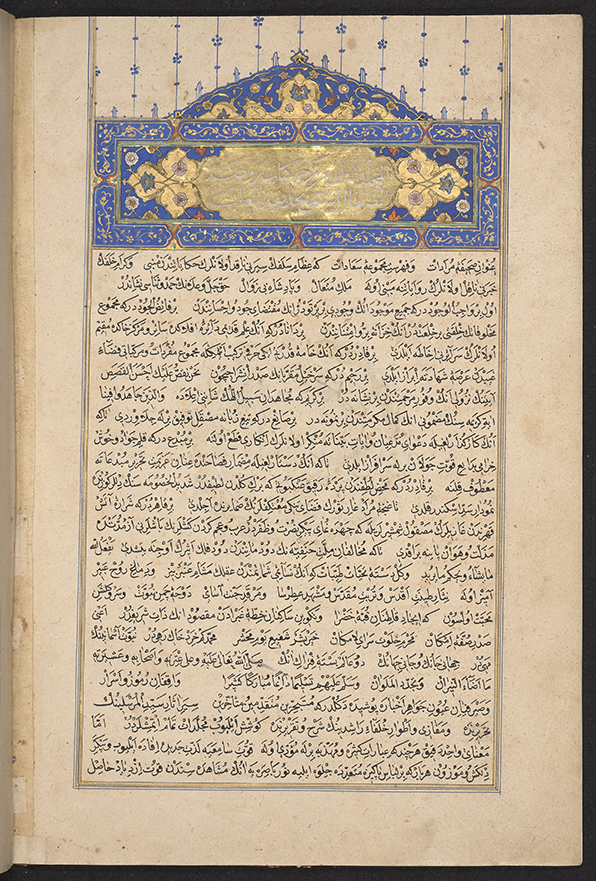
This presentation examines translation in the early‑modern Ottoman Empire, where Arabic, Persian, and Turkish literatures intersected. Ottoman Turkish, the third language of the “Three Languages” (elsine‑i s̱elās̱e) tradition, was shaped by elite‑scholar patronage. By analysing translation processes between the three languages, I highlight translators’ self‑conceptions and strategies for reaching target audiences. Focusing on the fourteenth to eighteenth centuries, I show how translators adapted advice literature and historiography for their readership. The talk considers the roles of translators, patrons, and readers, and the relevance of translation to Ottoman expansion, intra‑Islamic exchange, and literary norm formation. These case studies illuminate the translator’s craft, patronage politics, and text circulation, while also addressing manuscript materiality, library use, and the impact of printing on dissemination. Ultimately, the study demonstrates how translation shaped the Ottoman cultural‑intellectual landscape, mediating multilingual Islamic scholarship.
Bio
Philip Bockholt is a Junior Professor for the History of the Turco-Persian World at the Institute of Arabic and Islamic Studies at the University of Münster (since 2022). From 2022 to 2028, he will also lead the Emmy Noether Junior Research Group TRANSLAPT, “Inner-Islamic Knowledge Transfer in Arabic-Persian-Ottoman Translation Processes in the Eastern Mediterranean (1400–1750)”. He was formerly a research associate at the Institute of Oriental Studies at the University of Leipzig and received his PhD in Islamic Studies from the Freie Universität Berlin in 2018. His PhD dissertation, for which he received several national and international awards, such as the Annemarie Schimmel Prize for Islamic Studies, examined historiography in Iran in the early Safavid period (sixteenth century) and provided an analysis of Khvāndamīr’s Ḥabīb al-Siyar (“Beloved of Careers”) and its readership. In 2024, he completed his habilitation on the translation processes of works of historiography and advice literature at the University of Münster. A series of research fellowships has taken him to Delhi, Istanbul, Jerusalem, Madrid, Paris, Saint Petersburg, and Tokyo. His recent monograph publications include Weltgeschichtsschreibung zwischen Schia und Sunna (Brill, 2021), Ein Bestseller der islamischen Vormoderne (VÖAW, 2022), Authorship and Textual Transmission in the Manuscript Age (Cahiers de Studia Iranica, co-edited with S. Alsancakli, 2023), Multilingualism, Translation, Transfer: Persian in the Ottoman Empire (Diyâr Special Issue, co-edited with H. Çelik, 2024), and Elsine-i S̱elāse̱: A Cultural Analysis of Transmission and Translation in the Ottoman Empire (V&R unipress, co-edited with H. Çelik, L. Paul, and A. Sargsyan, 2025). He is one of the series editors of the newly established De Gruyter book series “Empires in Translation: Intersections of Arabic, Persian, and Turkish in the Eastern Mediterranean”. His forthcoming monograph, Türkische Übersetzungen aus dem Arabischen und Persischen, will appear in this series.
Organizer
Enzio Wetzel (Goethe-Institut Villa Kamogawa), Ryosuke Ohashi (Japanisch-Deutsches Kulturinstitut), and Majid Daneshgar (CSEAS, Kyoto University) *
* The organizers aim to continue the series of lectures regarding philology, its needs, methods as well as its challenges in the age of AI.