
VISITOR’S VOICE
Interview with CSEAS Visiting Scholars
Visitor’s Voice is a series of interviews to showcase our fellows while they stay with us at CSEAS
VISITOR’S VOICE
March 2026
Explaining Southeast Asia’s democratic deficit: between structure and agency
Interview with Aries A. Arugay
Department of Political Science, University of the Philippines-Diliman
CSEAS Visiting Research Scholar: March to June 2026
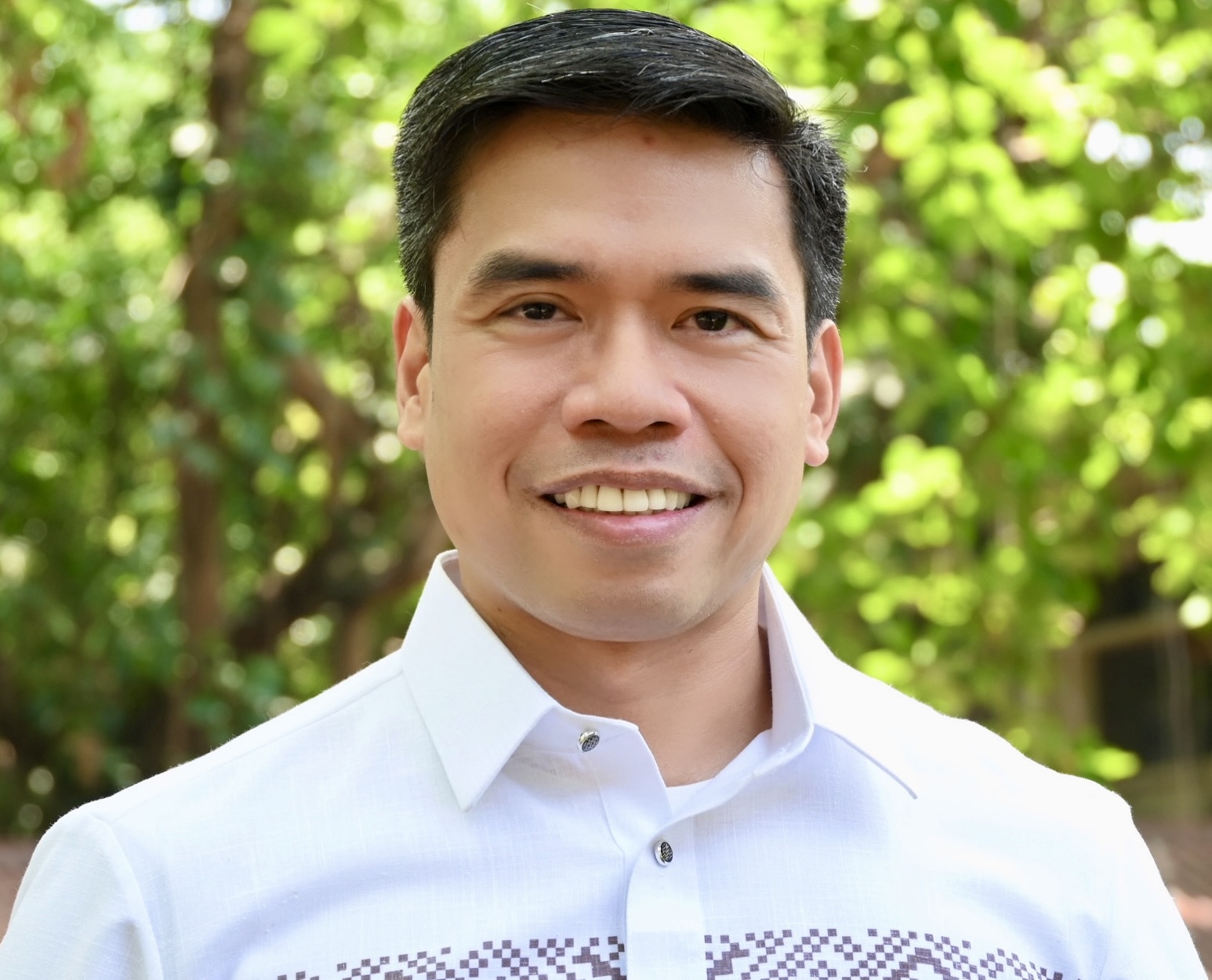
PROFILE
Dr Aries A. Arugay, a political scientist, investigates the threats faced by young democracies from populism, pernicious polarization, foreign influence operations, and militarized politics. As a specialist in Latin American and Southeast Asian politics, he derives cross regional and theoretically driven analysis of the flow and ebb of democratization processes and contentious politics in postcolonial states. An academic with more than two decades of experience, he is currently Professor of Political Science at the University of the Philippines, Diliman.
About Research
— Please tell us about your research.
Researching democratic politics in Southeast Asia always produces surprising and tentative results. I do not think we have reached a scholarly consensus on why democracy remains elusive in this part of the world. The answer lies in a combination of historical legacies, economic performance legitimacy, compromised or captured institutions, disillusionment with liberalism, semi-loyal political actors, and failed experiments with democratic politics. The jury is still out on whether the region’s democratic deficit stems from a “cocktail” of structural factors or from deliberate choices of political elites.
Research Inspiration
— Is there a specific moment or event that made you decide to enter this field?
My foray into democratization research was a by-product of my graduate training as a master’s student, as well as my personal experience participating in the 2001 People Power revolt in the Philippines that deposed the populist but corrupt president Joseph Estrada. I was already intrigued by how democratization processes in other parts of the world often appeared far from smooth, progressive, or linear. Deeply outraged by the aborted impeachment trial against Estrada, I joined the street protests, yet I also became increasingly aware that mass mobilization could have unintended negative consequences for Philippine democracy. This tension became the focus of my MA thesis, which I later extended comparatively in my PhD research to include cases from Southeast Asia (Thailand) and Latin America (Bolivia and Venezuela). Eye-opening fieldwork in these countries ultimately reinforced my commitment to sustaining this line of research.
Societal Impact
— Can you tell us about the impact of your research?
I have always believed that there are many pathways to successful and impactful scholarship in political science. I was mentored by academics who struck the difficult balance between rigorous scholarship and public policy engagement. As someone who studied in the Global North and returned to my home country, I think being a traditional ivory tower academic is very challenging, if not insensitive. For the past decade or so, my engagements straddled academic research, policy engagement, and working with government institutions, NGOs, media, and international organizations. This has made my career not only meaningful and impactful for my university and country, but also very fulfilling for me as a Filipino citizen.
Life Beyond Research
— How do you balance the demands of research with maintaining a fulfilling personal life, managing stress and well-being?
As a midlife academic, I am at the stage in my career and life where I prioritize my overall well-being. A few years ago, I decided to be more discerning about the amount of work I take on, given my carrying capacity. In our neoliberal-driven academic industry, we are severely pressured to satisfy numerous demands. In the context of publish-or-perish, the h-index fixation, indexed publications, grant proposal success rates, and so on, it is easy to be engulfed by this “rat race.” I realized that being a political scientist is much more than ticking milestone boxes, increasing citations, publishing books, and the indicators attributed to academic rockstars. For me, it is about building sustained engagement with my communities, producing impactful research that allows for a reimagination of my country’s politics, and mentoring the next generation of political scientists in the Philippines and Southeast Asia.
Advice for the Next Generation
— What advice or tips would you give to younger scholars?
My advice to young scholars is to have passion and compassion as your guiding virtues. The academic path is not an easy one, and it is not a choice that many people make. But once you have decided to pursue this path, grab hold of an enduring and determined passion for your craft. It will help you in those days when you think you don’t have what it takes and those times when you are suffering from impostor syndrome (which I still have sometimes!). Take inspiration from your mentors and others, but don’t feel that you have to be exactly like them. Equally important, have compassion for others—your students, your peers, and yourself—because you will stumble and receive rejections. Set goals and milestones, but have the wisdom to accept outcomes that do not go your way and re-ignite that passion to move forward and try again.
Looking Ahead
— What is the next step in your research journey?
I hope this wonderful sojourn in CSEAS will help me complete a project that is already more than a decade in the making—a sole-authored book emanating from my doctoral dissertation. This will help me move into the next phase of my career post-midlife. I am excited about doing more research on Philippine democracy and how it confounds all scholarly expectations about democratization. Things are still unfolding as we speak, so it will be a great new project. I also hope I can continue mentoring the next generation of Filipino political scientists and inspire them to do meaningful and impactful research that will speak truth to power and allow our country to reimagine a better political future.
* The views expressed herein are those of the authors and do not necessarily reflect the views of the Center for Southeast Asian Studies, Kyoto University.
Aries A. Arugay is a Professor at the Department of Political Science, University of the Philippines Diliman. He is also Editor-in-Chief of Asian Politics & Policy, a Scopus-indexed academic journal published by Wiley-Blackwell and the Policy Studies Organization. Aries is a Visiting Senior Fellow and Coordinator of the Philippine Studies Programme of the Institute of Southeast Asian Studies-Yusof-Ishak Institute (Singapore). Aries teaches undergraduate and graduate courses on comparative politics, international relations, research methods, and political thought. In 2020, the National Academy of Science and Technology of the Philippines recognized him as an Outstanding Young Scientist. He also received the Achievement Award in Social Sciences from the National Research Council of the Philippines in 2025.
As a track-two diplomacy practitioner, he has participated in over one hundred international meetings, workshops, and consultations on regional security, geopolitics, democratic governance, and ASEAN integration. He is one of the country’s leading political analysts and is often interviewed by domestic and foreign media.
Aries obtained his PhD in Political Science from Georgia State University (United States) in 2014 as a Fulbright Fellow and his MA and BA (cum laude) in Political Science from the University of the Philippines-Diliman.

Visitor’s Voiceは、CSEASに滞在しているフェローを紹介するインタビューシリーズです。彼らの研究活動にスポットを当てながら、研究の背景にある人々やさまざまなエピソードを含めて、一問一答形式で紹介しています。