
VISITOR’S VOICE
Interview with CSEAS Visiting Scholars
Visitor’s Voice is a series of interviews to showcase our fellows while they stay with us at CSEAS
VISITOR’S VOICE
March 2026
Exploring contention, documenting protests, and questioning silent resistance in Myanmar
Interview with Renaud Egreteau
Department of Public and International Affairs, City University of Hong Kong
CSEAS Visiting Research Scholar: February to April 2026
PROFILE
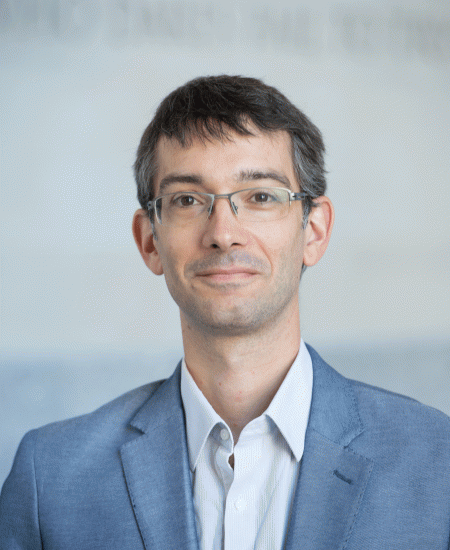
Dr. Renaud Egreteau is a political scientist with a keen interest in challenging existing theories about state-society interactions and how people engage with political institutions, especially in the context of conflict. An Associate Professor at the Department of Public and International Affairs, City University of Hong Kong, Dr. Egreteau has investigated the complex politics of democratization, military rule, collective action, and political dissent that have manifested in Southeast Asia and Myanmar in particular. At CSEAS, Dr. Egreteau will focus on the many ways ordinary citizens in Myanmar have mobilized against their state, past and present, seeking to capture how activists have deployed silent strikes and dead town tactics over time.
About Research
— Please tell us about your research.
Born in France, I was educated at both Sciences Po (Institute of Political Science) and Langues O’ (Institute of Oriental Studies and Languages) in Paris. With this multidisciplinary training, I examine the emergence and development of modern political institutions and how individuals engage with them, across diverse cultural settings—especially in Asia. I consider various perspectives and draw on diverse methodological tools when observing a particular phenomenon in politics. I might take a deep, solo dive into nineteenth-century government archives, run a focus group with elected legislators, conduct oral history interviews with members of a diasporic group to hear how they hold on to memories of their homeland, or take notes while watching a political ritual unfold. The idea is to be willing and ready, especially after years of research, to mobilize a new technique for collecting original data, while remaining informed about existing theories that could help explain a complex political situation.

[Babugon, 200 km north of Yangon, November 2012]
This is how I came to investigate the foreign policy influence of the armed forces (Soldiers and Diplomacy in Burma, NUS Press, 2013, with Larry Jagan), the civilianization of enduring military rule (Caretaking Democratization, Oxford, 2016), and the resurgence of parliamentary institutions in a post-authoritarian context (Crafting Parliament in Myanmar’s Disciplined Democracy, Oxford, 2022). I have also written on the return migration of Indian diasporic communities, the diffusion of hunger strikes as protest tactics, and the strategic rivalry between China and India across Southeast Asia. For all these research projects, I conducted field research to observe, meet, and learn from people, and to feel the pulse of border areas, bustling markets, and the corridors of power in ministries and parliamentary buildings.

Research Inspiration
— Please tell us about the initial motivation for your research and what keeps you going.
Growing up in a typical French family of teachers, after high school, I sought to merge two fascinations: exploring the world (having traveled with my parents across four continents) and understanding how political leadership shapes that world—for better or worse. As a result, I imagined pursuing a diplomatic career. However, during my doctoral studies, I soon found that crafting research puzzles and seeking to solve them with prospective theories and original data collected in foreign fields was actually kind of fun—even without funding and only a backpack to move around.
It still is, and my ethnographic toolkit stays active even in my personal life. When I proposed to my wife, who belongs to the Kachin community from northern Myanmar, I had to be formally adopted into a ‘wife-taker’ (Dama) clan and receive a traditional name. In Myitkyina, I underwent a naming ceremony, called sha htawng htu. Although I was the focus of the ceremony, led by a Baptist pastor, I could not help but take notes—asking about the materials used, noting the psalms recited, the significance behind the type of food prepared (dried beef and ginger), and how my adoptive parents selected my Kachin name. It was both moving and exhilarating. I had not read in vain, I gathered, the dense prose of Edmund Leach and Francois Robinne, two scholars who both described such Kachin rituals in far more scholastic ways.
Societal Impact
— How do you envision your research being utilized, developed, and contributing to society in the long term?
I hope that my research serves as a bridge between abstruse political science and the real-world sociopolitical landscape of Myanmar. Many have approached me during my research either to express gratitude for clarifying recent political events or, in sharp contrast, to offer a savage critique of my arguments. Diplomats posted in Yangon and the region have read my books. Foreign reporters covering elections in the country have built on my work. French activists have viscerally disagreed with my interpretation of military rule. Beyond the page, I have often engaged in spirited evening debates with elected members of Myanmar’s parliament seeking a reprieve from a dry legislative session in the eerie capital city of Naypyidaw. Myanmar students often reach out to get feedback and guidance on their theses. My research has even influenced foreign donors as they weighed whether to develop or suspend capacity-building programs in the country.

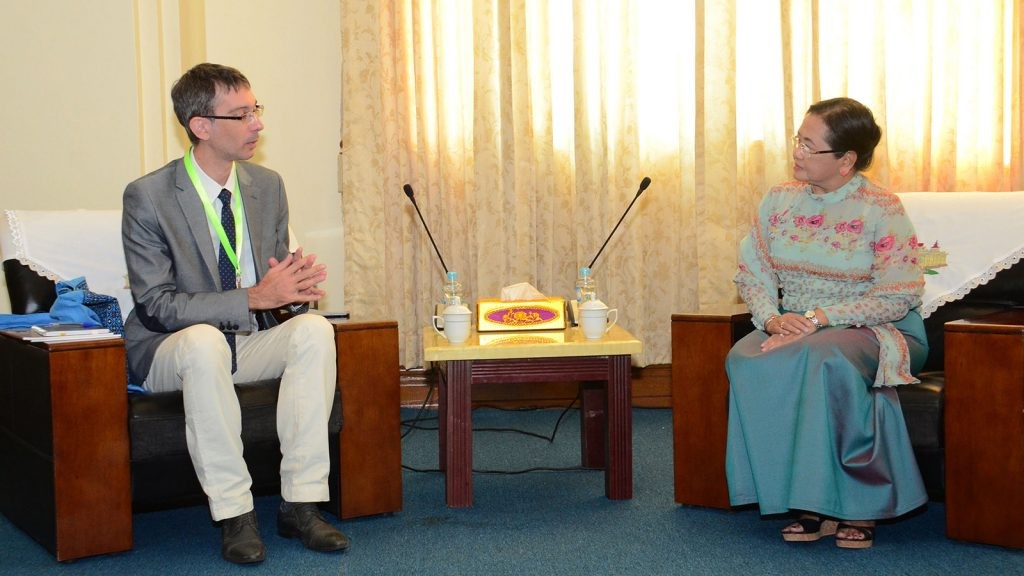
In an academic landscape that is too often obsessed with abstruse metrics and the relentless pursuit of citation scores, these grounded interactions surely provided a rewarding boost. They underscore the urgency of genuine, frequent community engagement, beyond the cold competition dictated by platforms such as Scopus or Web of Science.
Life Beyond Research
— Please tell us about you beyond your research.
True, life is more than just performance reviews and journal rankings. Growing up in France—yes, clichés often ring true—taught me to cherish epicurean moments. That often means turning off notifications from your university mailbox and dedicating weekends and holidays to your kids. It is, I admit, a luxury that tenured faculty can enjoy, if they don’t mind the lack of pay raises and promotions. However, there is vital joy in simple pleasures, whether cheering for your son as he hits the ski slopes for the first time, braving an overly spicy new creation from your spouse, or mapping out your next adventure. For us, these have included swimming with sharks in Polynesia, camping in Brittany, or hiking across Hong Kong’s countless islets.
Advice for the Next Generation
— What advice or tips would you give to younger scholars?
One of the core challenges we—researchers and teachers—are currently facing is the brutal ascent of generative AI. It both scares and captivates students and academics like myself. While its potential for social inquiry seems extraordinary, many of us are skeptical of its impact on the ethics and fundamental nature of our work. To aspiring scholars, I would suggest that creativity and originality are not found solely in digital tools; they are cultivated through deep reading, extensive travels to unfamiliar places, and direct observations of puzzling situations.
One of the very first books about Myanmar, which I read in its entirety as I began my Master’s thesis ages ago, was Martin Smith’s Burma: Insurgency and the Politics of Ethnicity in Burma (Zed Books, 1999). GenAI tools can now summarize such a dense monograph effortlessly, and generate sleek infographics on the myriad of political forces that fought the state (and one another) in postcolonial Myanmar. That is wonderful. However, such tools cannot replace the intellectual digestion required to form, for yourself, a solid picture of how political developments unfolded in the country after its independence in 1948. For political researchers and Southeast Asianists—whether Myanmar or foreign—there is simply no substitute for engaging with such a book yourself.
Looking Ahead
— What is the next step in your research journey?
In the early 2010s, I began a broad research focus on how nascent parliamentary institutions in Myanmar develop during political reform. Then the Myanmar armed forces seized power (again) in February 2021. I am nearing the completion of this project, which has been grounded in several years of field observations in Naypyidaw, Myanmar’s capital, where the national legislature is seated. Even if the regime that emerged from the coup has recently organized a new round of general elections, I am unlikely to have the same liberty to observe parliament at work in the near future.
Taking a broader perspective, I am now investigating the many ways ordinary citizens in Myanmar have mobilized and protested against authorities of all sorts, past and present. This is timely. I aim to capture and question the sets of tools, tactics, and strategies employed by Myanmar’s vast array of protest actors over time. This is a longitudinal study that will allow me to continue ethnographic work—by engaging with activists through interviews, mainly outside the country—while also delving into historical sources and archives to understand how Myanmar’s social and contentious actors have learned and drawn lessons from their own, often understudied, history of resistance. Here are two of my recent articles on the diffusion and adaptation of hunger strikes into Myanmar’s contentious politics, in South East Asia Research and the Journal of Current Southeast Asian Affairs.
* The views expressed herein are those of the authors and do not necessarily reflect the views of the Center for Southeast Asian Studies, Kyoto University.
Dr. Renaud Egreteau received a PhD in Political Science from the Institut d’Etudes Politiques de Paris (Sciences Po) and currently works across comparative and international politics, as well as South and Southeast Asian studies. In 2018, Egreteau joined City University of Hong Kong, where he is now a tenured Associate Professor at the Department of Public and International Affairs. Before joining and while at CityUHK, he received several visiting fellowships, including from the Woodrow Wilson International Center for Scholars in Washington, DC (2015-2016), the ISEAS-Yusof Ishak Institute in Singapore (2015 and 2017), and CSEAS at Kyoto University (2026). Egreteau also taught comparative politics at the University of Hong Kong (as a Research Assistant Professor at the Center of Asian Studies/HK Institute for the Humanities and Social Sciences, 2009-2013) and Sciences Po Paris (2008-2009). He have written policy guidance on Myanmar and India for international NGOs, think tanks, and various French and European governmental bodies. Oxford University Press published his two most recent books: Crafting Parliament in Myanmar’s Disciplined Democracy, 2011-2021 (2022), and Caretaking Democratization: The Military and Political Change in Myanmar (2016).

Visitor’s Voiceは、CSEASに滞在しているフェローを紹介するインタビューシリーズです。彼らの研究活動にスポットを当てながら、研究の背景にある人々やさまざまなエピソードを含めて、一問一答形式で紹介しています。